Zwickau
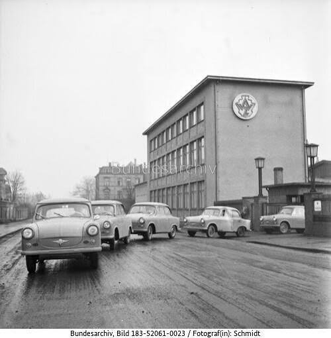
Zwickau is a city in Saxony that is, if at all, known for three things: its role in the protestant reformation, the Romantic composer Robert Schumann, and the “Trabant” – the iconic East German car – that was once produced there. My entire childhood was spent in this city; and that meant living, for quite some time, under the “real-existing” socialism of the German Democratic Republic (GDR). Since 1989/90, the city has been reborn (and recoloured); yet it also lost one-third of its population with especially younger people having left for “West Germany” or a life abroad. Still, the city is worth a visit, especially if you are a young pianist (during the international Schumann competition). However, much of the former GDR side is today gone – even the enormous satellite suburbs of Plattenbauten have been built back. But those interested in the life of the GDR and what it meant growing up there should read Steffen Mau’s “Lütten-Klein” that beautifully tells the story of another East German city’s social transformation (as well as that of the author himself).
Florence
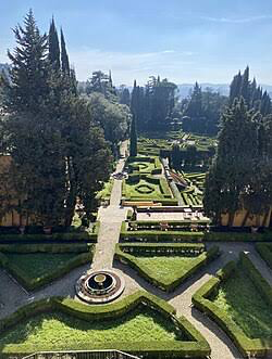
This city needs no introduction: Machiavelli, Michelangelo and the Medici! I saw it for the first time when coming to be interviewed for a PhD place at the European University Institute (EUI) and even today, Florence still means mostly “EUI” to me. I spent four rich years there (with some additional time spent as a “stagiaire” in the Legal Service of the Commission and the European Court of Justice). And, when at the EUI, I could not imagine a better place for doctoral research: lots of time to read, lots of interesting people to meet, and lots of opportunities to go into the world, whether academic, professional or personal. Since I graduated, the EUI has changed quite a bit – the Law Department, for example, used to be housed in Villa Schifanoia and seemed so much smaller than today. But I imagine the experience young research students get today is as magical as it used to be – and, if you want to escape the confines of renaissance city, there is always Rome with all its historical splendours and urban temptations. My first visit to Rome was indeed organised by the EUI, and it was love at first sight…
Durham
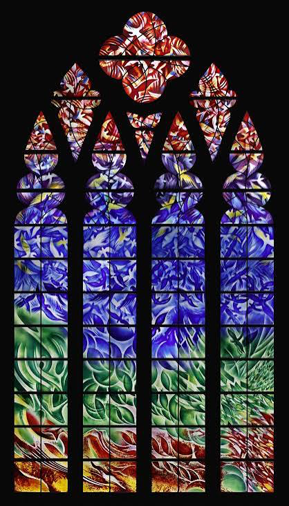
To quote the travel writer Bill Bryson, who would become a Chancellor of the University: “If you have never been to Durham before, go there at once. Take my car, it’s wonderful.” Durham is an enchanted medieval city in the North-East of England with one of the oldest cathedrals and English universities. Its cathedral and university are however only one side of the city. Surrounded by former mining villages, it is also the place where one of the biggest British working-class festivals takes place every year: the Durham Miners’ Gala. (Incidentally, when the United Kingdom thought of joining the 1951 European Coal and Steel Community, the then British government’s view was that “the Durham miners simply won’t wear it”.) With the mines long gone, the University now dominates almost all aspects of city life – economic, cultural, spatial – and I have been working at its Law Department ever since I left Florence. Among the many remarkable people I became friends with here are the sociologist David Held, with whom I co-directed the “Global Policy Institute” for some time, the historian Nicole Rheinhardt, and the comparativist Mathias Siems.